.png)
Why Print Is Essential to Building a Strong Brand
- 6 hours ago
- 5 min read
When most businesses think about branding, the first things that come to mind are usually a logo, website, colour palette, or social media presence.
But your brand exists in far more places than a screen.
It's on the business card handed to a new customer.
It's on the packaging they carry home.
It appears on the brochure sitting on their desk.
It's on the form they complete.
It's on the presentation folder they receive.
It's on the poster they pass when entering your business.
Each of these printed pieces may serve a different purpose, but together they contribute to one larger experience.
That is why print branding matters.
The strongest brands do not treat print as a collection of unrelated products. They treat every printed material as another opportunity to reinforce who they are.
Your Brand Is More Than Your Logo
A logo is an important part of your visual identity, but simply placing the same logo on every printed product does not automatically create a consistent brand.
Customers also notice:
Colour
Typography
Photography
Layout
Paper and material choices
Print quality
Finishing
Tone of voice
Overall presentation

These details work together to create an impression.

Imagine receiving a premium presentation folder from a company, followed by a business card printed on noticeably lower-quality stock with slightly different colours and an outdated design.
Both pieces might technically contain the correct logo.
But they do not necessarily feel like they belong to the same brand.
Consistency is what transforms individual printed products into a recognizable brand system.
Every Printed Touchpoint Shapes the Customer Experience
A useful way to think about branded print is to consider the different stages of your customer's relationship with your business.
Before They Engage With You
Print often influences customers before they ever speak with your team with print products such as:
Signage and Displays: Exterior signs, banners, window graphics and point-of-sale displays can establish your visual identity before a customer enters your location.
Brochures and Flyers: Marketing materials may be someone's first introduction to your company, products or services.
Direct Mail: Postcards, promotional mailers and branded correspondence can introduce your business directly into someone's home or workplace.
Packaging and Labels: For businesses selling physical products, packaging may be the first tangible interaction someone has with the brand.
These materials help answer an important question before a conversation even begins:
What kind of company is this?
During Your Interaction
Once a customer begins interacting with your business, print continues reinforcing their perception through:
Business Cards: A business card may be small, but it often represents an employee, salesperson or company during an important introduction. Stock, finishing, colour reproduction and design can all influence how that interaction feels.
Presentation Folders: Folders bring multiple documents together into one polished package and are particularly useful for proposals, sales meetings, property information, financial documents and onboarding materials.
Forms and Business Documents: Forms are often viewed as purely operational. But if customers see them, they are part of your brand. Invoices, applications, contracts, carbonless forms and other everyday documents should still feel connected to the rest of your visual identity.
Brochures and Booklets: Longer-form printed pieces provide an opportunity to communicate your story, services or products while reinforcing the visual elements customers already associate with your company.
Packaging: The physical experience of opening, carrying or receiving a product can have a significant influence on how that product is perceived. A thoughtfully designed box, label, sleeve or insert can turn functional packaging into part of the customer experience.
After The Customer Leaves
One of the advantages of physical branding is that it can remain with customers long after an initial interaction.
The bag they carry your product home in.
The box they takeaway food in.
The thank you note you've added to each purchase.
The branded receipt the customer takes with them.
The calendar they use on their desk every single day. on their desk
This is where printed materials differ from many short-lived digital interactions. They occupy physical space. And when they are useful, well designed, and thoughtfully produced, customers often choose to keep them there.
The Problem: Printed Materials Often Evolve Separately
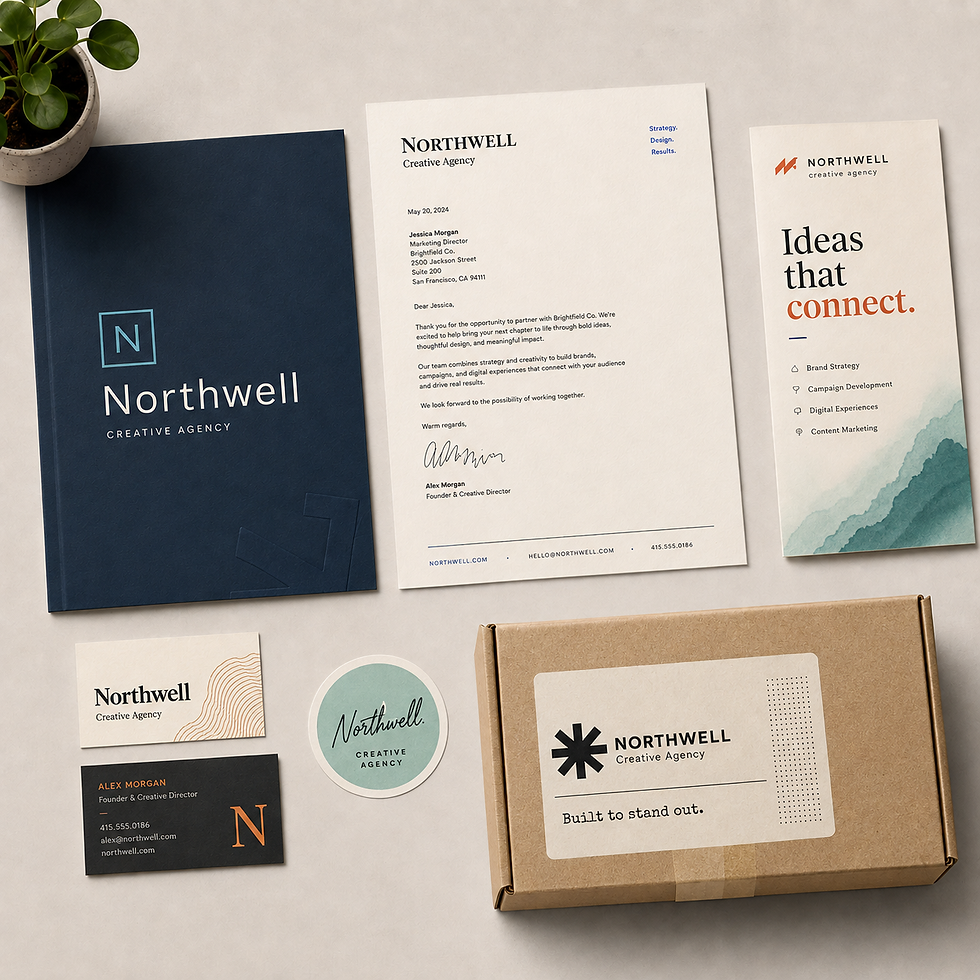
Most businesses do not intentionally create inconsistent print. It happens gradually.
A brochure is redesigned one year.
New business cards are ordered the next.
A product gets new packaging.
Someone creates a form internally.
An older presentation folder continues being reordered because the artwork already exists.
Five years later, a company may have dozens of printed materials created by different designers, departments and vendors.
Individually, each piece may work perfectly well.
Together, they may tell a different story.
Common inconsistencies include:
Slightly different versions of brand colours
Multiple logo variations
Outdated fonts
Different paper qualities
Inconsistent photography
Older messaging or contact information
Different finishing styles
Materials that no longer reflect the current brand
This is why periodically reviewing your complete collection of printed materials can be valuable.
A Simple Print Branding Exercise
Gather examples of the printed products your business currently uses and place them side by side.
This could include:
Business cards
Letterheads
Forms
Brochures
Flyers
Presentation folders
Labels
Product packaging
Envelopes
Signage
Booklets
Promotional materials
Then ask yourself:
Do these look like they belong to the same company?
Look beyond the logo.
Are the colours consistent?
Does the quality feel similar?
Are the fonts and layouts connected?
Does older material still represent how you want the business to be perceived today?
This simple exercise can reveal branding opportunities that are difficult to notice when each product is viewed individually.
Improving Your Printed Brand Does Not Mean Replacing Everything
A print review does not need to become a complete rebrand. In many cases, the most useful improvements are relatively small and include:
Reviewing these items together can uncover opportunities to standardize specifications, simplify reordering and create a more consistent result.
Bring Your Printed Brand Together
Sometimes the easiest way to identify opportunities is to have someone look at the complete picture.

COT can review the printed materials your business currently uses and help identify opportunities to improve consistency, quality or efficiency.
Our Complimentary Printed Brand Review includes a review of your existing materials followed by practical recommendations on where improvements may be most useful.
That could include:
Improving consistency across printed materials
Reviewing paper and material choices
Standardizing colour reproduction
Updating outdated pieces
Consolidating related products or specifications
Identifying useful finishing opportunities
Prioritizing the upgrades likely to have the greatest impact
The goal is not to tell you to replace everything.
It is to help determine what is already working, what could work better and where your next print investment could make the most difference.
Ready to see how your printed brand works together?
Request your complimentary Printed Brand Review with COT.


Comments